My sixteen-year-old daughter, Maya, had been acting strangely for weeks.
At first, I told myself it was nothing unusual. Teenagers get stressed. They become moody. They spend more time on their phones and less time talking to their parents. I convinced myself that whatever was bothering her would pass.
But deep down, I knew something had changed.
Maya had always been the kind of kid who filled a room without even trying. She laughed loudly, remembered people’s birthdays, and somehow seemed to know when someone needed a hug before they ever asked for one.
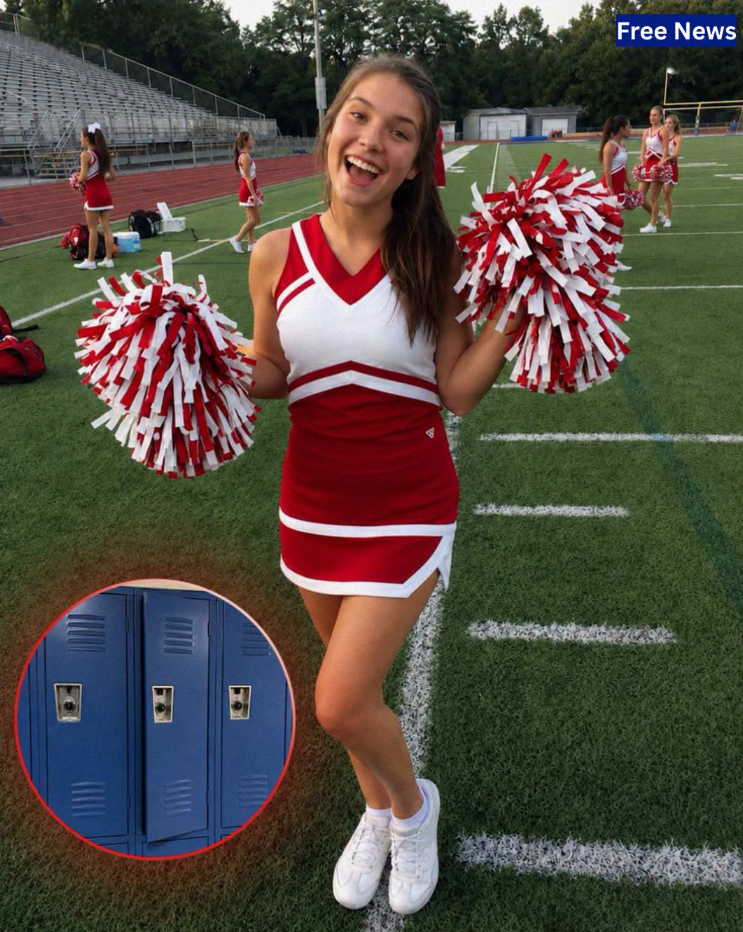
Cheerleading was her favorite thing in the world.
After practice, she usually came home glowing, talking so quickly that I could barely keep up. She would tell me about routines, teammates, competitions, and every little thing that had happened that day.
Then, suddenly, she stopped.
At dinner, she pushed food around her plate instead of eating. She began checking her phone beneath the table, careful not to let me see the screen.
Twice, I caught her staring at a message with her lips pressed tightly together.
“Everything okay?” I asked one evening.
“Just tired.”
That was all.
Teenagers get tired. They get moody. They have bad days.
So I told myself not to hover.
Still, every time Maya forced a smile, I felt a small warning in my chest.
And every time, I ignored it.
Then last Tuesday, she came home from cheerleading practice twenty minutes late.
The moment she walked through the door, I knew something was wrong.
Her eyes were red. Mascara was smeared beneath them. Her hair was still pulled back from practice, but she looked nothing like the energetic girl who normally came home after cheerleading.
She walked straight past me without even taking off her shoes.
“Maya, what happened?”
She stopped on the stairs but didn’t turn around.
“Nothing, Mom. Please.”
Then she disappeared upstairs.
By the time I reached the landing, her bedroom door had already locked.
I knocked once.
Then twice.
“Honey, dinner is ready.”
No answer.
I stood outside her room for several seconds.
“You don’t have to tell me everything,” I said softly. “Just tell me if you’re safe.”
A long pause followed.
“I’m safe.”
Her voice cracked.
That frightened me more than if she had said nothing at all.
She refused dinner.
Around ten that night, I left a piece of toast outside her bedroom door like she was eight years old again.
In the morning, the toast was untouched.
Maya came downstairs pale and shaky.
“I feel sick.”
I touched her forehead.
No fever.
Something still didn’t feel right, so I told her to stay home from school. I went downstairs to make tea, hoping that maybe a quiet morning would give her time to calm down.
Less than an hour later, my phone rang.
“Mrs. Carter, is Maya home with you?”
It was her principal, Mr. Patel.
His voice sounded careful.
Not concerned.
Careful.
The kind of careful adults use when they already know something serious has happened.
“Yes,” I answered. “Why?”
There was a pause.
“I need you here as soon as possible.”
My grip tightened around the phone.
“What happened?”
Mr. Patel exhaled slowly.
“We opened her locker.”
My stomach dropped.
“Why?”
“A custodian noticed that it wasn’t fully latched. There was an envelope of cash visible inside, so he reported it.”
“Cash?”
Another pause.
“Mrs. Carter, please come see this yourself.”
I looked toward the staircase.
Maya was standing halfway down.
She had clearly been listening.
Neither of us spoke.
I grabbed my keys.
“Where are you going?” she asked.
“School.”
Her expression changed so quickly that I almost missed it.
Fear.
Not guilt.
Dread.
“Mom, don’t.”
I stared at her.
“Why not?”
She swallowed hard.
“Please just don’t.”
That was all she said.
The nine-minute drive to school felt like an hour.
Every ugly possibility raced through my mind.
What had been inside Maya’s locker?
Why was there cash?
Why had the principal sounded so serious?
And, most importantly, why had my daughter looked terrified when I said I was going to school?
Mr. Patel met me outside the office.
He led me down the hallway toward Maya’s locker, where the assistant principal and a security officer were waiting.
Then he opened it.
A plain shoebox sat on the middle shelf.
Inside were envelopes.
Dozens of them.
Some were thick. Others were nearly empty.
I saw five-dollar bills, tens, and twenties.
Every envelope had a student’s name written across it in Maya’s neat handwriting.
Mr. Patel began removing them carefully.
Then he noticed one smaller envelope.
It didn’t have a student’s name on it.
Instead, someone had written:
“For whoever needs lunch. —R”
I stared at it.
Beneath the envelopes was a black spiral notebook.
Mr. Patel picked it up.
“What is this?” I whispered.
“We hoped you might know.”
He opened it.
Page after page was filled with names.
Beside each name was a short note.
Field trip.
Yearbook.
Shoes.
Calculator.
Lunch account.
Uniform fee.
The amounts were carefully recorded.
So were the amounts that had been spent.
And the balances that remained.
Mr. Patel looked at me.
“We’re concerned Maya may be collecting money from students.”
“No,” I said immediately.
The answer came so quickly that he blinked.
“You can’t know that yet.”
“I know my daughter.”
He studied my face for a moment.
“I understand. But there are several hundred dollars here connected to students across different grades. We need an explanation.”
I looked down at the notebook again.
Something bothered me.
It wasn’t the names.
It wasn’t the money.
It was the way everything had been recorded.
This didn’t look like a teenager secretly hiding stolen cash.
It looked like an accountant trying desperately not to lose track of somebody else’s money.
Every entry listed what had been received, what had been spent, and what was left.
Maya had even crossed out one mistake, corrected it, and initialed the change.
I looked at Mr. Patel.
“I need to talk to her.”
After the office documented everything, he allowed me to take the notebook home.
When I returned, Maya was sitting at the kitchen table, exactly where I had left my tea earlier that morning.
She took one look at the notebook in my hands.
Then she covered her face.
“Oh no.”
I sat across from her.
“I know you weren’t stealing.”
She slowly looked up.
“You do?”
“I know you. But I don’t know what this is.”
I placed the notebook on the table.
“So tell me.”
For a moment, she said nothing.
Then she whispered, “It started with Kayla.”
Maya rubbed her sleeve across her eyes.
“She kept saying she wasn’t hungry at lunch. But she’d stare at everyone’s food.”
“What happened?”
“I asked her privately. Her meal account was empty.”
Maya explained that Kayla had begged her not to tell anyone.
“So you paid?”
“Just once, at first.”
“Then what?”
“Jordan needed money for a field trip. Priya broke her calculator before exams. I had babysitting money, so I helped.”
I looked at the notebook.
“Maya, babysitting doesn’t explain all those envelopes.”
She nodded.
“Other kids noticed.”
“Then people started putting cash in my locker.”
“Why?”
“Five dollars here. Ten there.”
“Without asking?”
“At first.”
I looked at her.
“At first?”
She lowered her eyes.
“Then people started asking if they could give me money for whoever needed it next.”
That was when I understood.
Maya hadn’t created some secret business.
She had created a quiet way for students to help other students without having to explain themselves publicly.
But there was something else.
“Why were you crying after practice?”
Maya’s face changed.
“Because some of the money is gone.”
My chest tightened.
“How much?”
She whispered:
“One hundred eighty dollars.”
“When?”
“Yesterday.”
Maya explained that she had checked the envelopes before cheerleading warmups because one of the payments was due that week.
After practice, she checked again.
One envelope was missing.
She searched the locker.
Then her backpack.
Then under the benches.
Even the trash.
Nothing.
“I knew how it would look,” she said. “People trusted me. What if everyone thinks I took it?”
“Did you message anyone?”
“Only the group chat.”
She handed me her phone.
Her message read:
“If anyone moved an envelope from my locker after practice, please tell me. No questions. I just need it back.”
Below it were worried replies.
Then questions.
Then rumors.
I handed the phone back.
“Show me yesterday’s page.”
Maya hesitated.
Then she opened the notebook.
My eyes moved down the list.
Kayla.
Jordan.
Priya.
Then I saw it.
Sam.
Band trip.
$180.
Due Friday.
I tapped the line.
“The exact amount that’s missing.”
Maya shook her head immediately.
“No.”
“I didn’t say anything.”
“You’re thinking it.”
“Of course I’m thinking it.”
“Sam wouldn’t steal.”
Her certainty surprised me.
“You know him well?”
“We ask one question,” I said. “That’s all.”
“No. That’s the point.”
Maya pushed her chair back.
“He’s quiet. People already act like he’s weird because he barely talks. If we go after him just because his entry matches the amount—”
“We’re not going after anybody.”
She stopped.
“We’re asking one question.”
She looked at me.
“Together?”
“Together.”
Her shoulders relaxed slightly.
“Band rehearsal ends at four thirty.”
We drove back to the school that afternoon.
We waited outside the band room as students filed past.
At 4:41, the door opened again.
Sam emerged carrying a trombone case almost as tall as he was.
The moment he saw Maya, he froze.
Maya saw it too.
His fingers tightened around the handle of the case.
“Sam,” she said gently. “Can we talk?”
“About what?”
Maya glanced at me.
I let her answer.
For several seconds, nobody spoke.
Then Maya said:
“Something went missing from my locker yesterday.”
Sam’s face drained of color.
Then he spoke so quietly we almost didn’t hear him.
“I didn’t spend it.”
Maya went completely still.
His hands shook as he set down the trombone case and opened his backpack.
“Spend what?” I asked.
Sam looked at me.
Then at the floor.
“The money.”
He pulled out a white envelope.
Maya’s handwriting was on the front.
His name.
Inside were nine crisp twenty-dollar bills.
“Open it,” Sam whispered.
Maya counted them once.
Then again.
One hundred eighty dollars.
She laughed and cried at the same time.
“You told me the fund could pay my band trip.”
“Yes.”
“So when I saw an envelope with my name on it, I thought you’d put it there for me.”
“Then why did you take it?”
Sam flinched.
“You walked away during practice. Your locker was open. The payment is due tomorrow. I thought I was supposed to take it.”
Maya stared at him.
“Then everyone started saying money had disappeared.”
Sam swallowed.
“Why didn’t you answer my message?”
“Because everybody was saying someone stole from you. And I had the money.”
His voice cracked.
“I thought maybe I misunderstood.”
Maya covered her mouth.
“Oh.”
Then she shook her head.
“You didn’t steal it. I handled the situation badly.”
Sam blinked.
“You’re not mad?”
“I’m mad I spent all night thinking I’d lost everyone’s trust.”
The missing money was back.
Sam gave a weak smile.
“I spent all night thinking I accidentally became a criminal.”
Even I laughed.
But the shoebox problem wasn’t over.
Sam left with his trombone case, but Maya stopped me before we reached the parking lot.
“Can we go through the cafeteria?”
Inside, the tables had been wiped clean, and the serving line was dark.
Maya pointed toward a table near the windows.
“Kayla used to sit there and say she wasn’t hungry.”
“That’s where this started?”
She nodded.
“Maya?”
A woman in a cafeteria apron stepped from behind the counter.
Maya gave her a small smile.
“Hi, Rosa.”
Rosa noticed the notebook in Maya’s hand.
“So they found out.”
Then I remembered the envelope from the locker.
“For whoever needs lunch. —R”
I looked at her.
“You’re R.”
Rosa looked embarrassed.
“Mr. Ellis gave me twenty after he saw me help Kayla.”
“That was supposed to be anonymous.”
She explained that she’d seen Maya quietly cover lunch costs when students came up short.
One day, Rosa had slipped Maya five dollars for the next child who needed it.
Then Mr. Ellis gave Maya twenty after seeing her help Kayla.
After that, Ms. Alvarez found out.
Then other people began contributing.
“Kids too,” Rosa added.
I opened the notebook again.
Twenty-seven names.
Twenty-seven students who had needed something.
Twenty-seven people Maya had tried to help without exposing them.
If you had asked me that morning what to make of the evidence in Maya’s locker, I wouldn’t have known.
Now I understood.
The money wasn’t proof of wrongdoing.
It was evidence of trust.
But there was still a question I couldn’t stop thinking about.
“Why didn’t you tell me?”
Maya looked toward the dark cafeteria serving line.
“Because then it wouldn’t be theirs anymore.”
I didn’t understand.
She explained that if adults became involved, students might have to explain why they needed help.
They might have to prove that their families were struggling.
They might have to sit in front of strangers and tell them things they didn’t want anyone else to know.
Maya didn’t want that.
She wanted them to receive help without having to surrender their privacy.
Rosa looked at her softly.
“You don’t have to take the world’s problems onto your shoulders alone, Atlas.”
For once, Maya had nothing to say.
The next morning, we told Mr. Patel everything.
He listened without interrupting.
When Maya finished, he looked down at the black notebook.
“You cannot keep hundreds of dollars in a school locker.”
Maya sighed.
“I know.”
Mr. Patel’s expression softened.
“I admire what you were trying to do.”
“But?”
“But you cannot keep hundreds of dollars in a school locker.”
Maya looked disappointed.
“So it’s over?”
I looked at the notebook.
“Not necessarily.”
A few days later, the school counselor, cafeteria manager, parent association, and school administrators met with us.
Everyone agreed on one thing.
The locker system was over.
No more loose cash.
No student acting as a banker.
No secret pile of money sitting inside a school locker.
But they also recognized what Maya had created.
A parent representative suggested that recipients write thank-you notes, maybe even include photos, so donors could see who they had helped.
Maya’s shoulders immediately tightened.
“No names.”
The room became quiet.
“No pictures.”
The representative looked confused.
“But people want accountability.”
Maya slid the black notebook across the table.
“Then track the money.”
She paused.
“Don’t track the kids.”
Everyone looked at her.
“They trusted me because they didn’t have to explain themselves in front of everybody,” Maya said.
Her voice was calm now.
“If they have to prove they’re struggling before they get help, we’re doing it wrong.”
Mr. Patel opened the notebook and flipped through the careful entries.
“This tells us where the money went,” he said.
Then he looked directly at Maya.
“And it tells me you shouldn’t have had to manage this alone.”
He turned toward the others.
“We track the funds, and the students should still have their privacy.”
That became the new system.
The money would be handled properly.
Adults would oversee the accounts.
No student would have to carry hundreds of dollars around in a locker.
And the students receiving help would not be publicly identified.
It was a strict rule.
And nobody broke it.
A month after the locker scare, I heard the front door fly open.
“MOM!”
Maya had just come home from cheerleading practice.
She dropped her bag beside the kitchen table.
“Coach moved me to center for Saturday, and Kayla almost dropped me, and you will not believe what happened at lunch.”
She was talking fast again.
Bright.
Excited.
Alive.
I stood there smiling.
There she was.
The daughter I had been worried about for weeks was back.
Then Maya reached into her pocket.
“Also, look.”
She pulled out a small envelope.
Inside was a five-dollar bill and a folded note.
I opened it.
The message was simple:
“Someone helped me last year. My turn.”
I read it twice.
Then I handed it back.
Maya tucked the five-dollar bill into her pocket.
“You know where it goes,” I said.
She smiled.
“I do.”
And then she started telling me about cheer practice again, talking quickly and brightly, jumping from one story to another so fast that I could barely interrupt her.
For the first time in weeks, I didn’t have to ask whether my daughter was okay.
I already knew.