“Play it,” I said.
Martin touched the screen.
The video resumed in the silent front hall of Evergreen. Vivian’s recorded voice came through clearly from the tablet.
“If she refuses to sign, put the bags outside anyway.
Richard is in Europe, Caleb is dead, and by the time anyone asks questions she’ll be in Kentucky.”
No one moved.
On the recording, the young lawyer standing beside Vivian that morning asked, “Do you have authority from the owner to remove Mrs.
Hawthorne?”
Vivian answered without hesitation.
“I am the authority.
My brother has trusted me with family matters for years.”
The lawyer beside her in the hall now went pale.
“That is not what you told me,” he said.
Vivian spun toward him.
“Do not start performing innocence now.
You drafted the papers.”
“I drafted a voluntary relocation acknowledgment based on your representation that Mrs.
Hawthorne had agreed to leave.”
“She was going to agree.”
Lena’s fingers tightened around the handle of one suitcase.
I could feel the effort it took for her to remain standing in the same room where she had been humiliated only hours earlier.
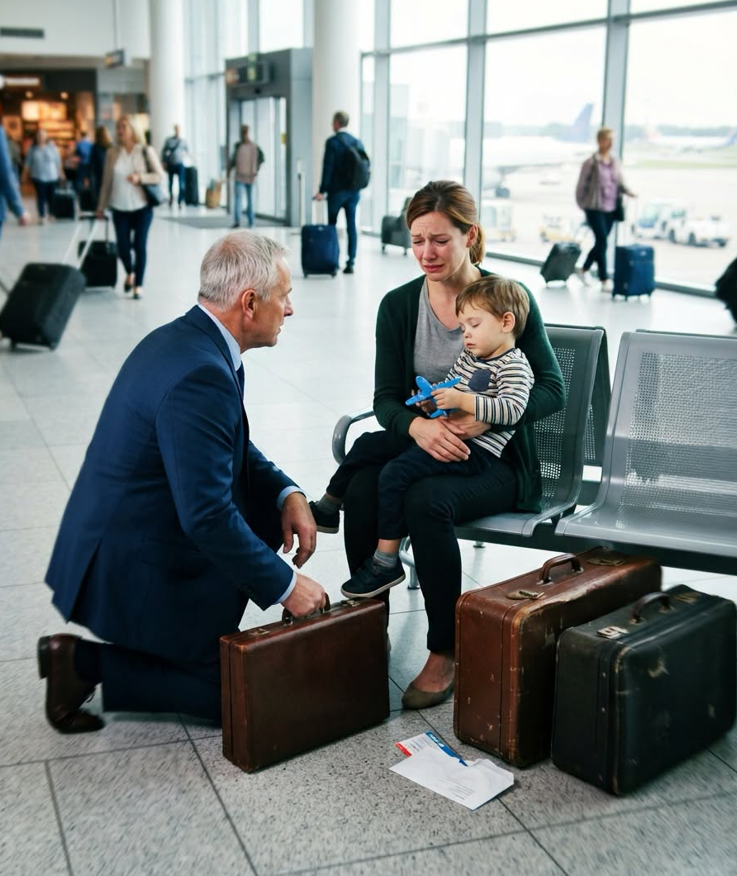
Miles was beside Martin in the library doorway, holding his blue airplane.
My housekeeper, Rosa, had returned from taking him to the kitchen for warm milk.
She stood behind him now, one protective hand on his shoulder.
Vivian saw the boy and lowered her voice, but the softness was artificial.
“This is a family dispute.
There is no reason to frighten Miles.”
I stared at her.
“You had security guards carry his belongings onto the driveway.”
Her jaw tightened.
“I was trying to avoid a scene.”
“You created one.”
I turned the deed fully toward her.
“Read the owner’s name.”
Vivian’s eyes dropped to the page.
Evergreen had been built by my grandfather but transferred repeatedly through companies and trusts over the decades.
Few people outside my legal team knew its present ownership structure.
Vivian had apparently assumed that because Hawthornes had lived there for generations, she could invoke the family name like a title deed.
She could not.
Martin spoke instead.
“The property is owned by the Caleb Hawthorne Family Residence Trust.”
Lena looked at him.
Her lips parted.
Vivian laughed once, sharply.
“That is impossible.”
“It was established by Richard and Caleb two years ago,” Martin said.
“Caleb was the primary beneficiary during his lifetime.
Upon his death, beneficial occupancy transferred to his surviving spouse and child.”
Lena turned toward me.
I saw confusion, then disbelief.
“Caleb never told me.”
“He wanted to,” I said.
“I told him to wait until the paperwork was complete.
Then life became busy.
We thought we had time.”
Those last words hurt more than I expected.
Caleb had been thirty-four when his aircraft went down during a training exercise.
There had been no dramatic final goodbye.
No speech.
No warning.
He had kissed Lena before sunrise, texted me a joke about a board presentation, and promised Miles pancakes on Saturday.
By Friday evening, I was standing beside my daughter-in-law while a military officer explained that my son was not coming home.
Grief had made every ordinary unfinished conversation feel sacred afterward.
Vivian pushed the deed away.
“Beneficial occupancy is not ownership.”
Martin nodded.
“Correct.”
A flash of triumph crossed her face.
Then he continued.
“But you are not the owner, trustee, beneficiary, tenant, or authorized manager.
You had no legal authority to evict anyone.”
Her expression hardened.
“I am Richard’s sister.”
Martin closed the folder halfway.
“That is not a legal interest in real property.”
One of the guards looked at the floor.
The other quietly moved toward the front door.
Vivian noticed.
“You two stay where you are.”
The older guard shook his head.
“Ma’am, we were contracted for a lawful removal.
If the residents have occupancy rights, we’re done.”
“You accepted my money.”
“We accepted a deposit from your office.
We did not accept liability for trespass.”
The front door closed behind them less than thirty seconds later.
Vivian stood very straight beneath the chandelier.
All her power that morning had depended on people believing she spoke for me.
Now those people were leaving one by one.
Her lawyer gathered his documents.
“You’re not going anywhere,” she snapped.
He looked at me, then Martin.
“I need to clarify that I was retained based on material statements that appear to have been inaccurate.”
Vivian’s face flushed.
“You knew exactly what we were doing.”
“I knew what you told me we were doing.”
He put the unsigned relocation acknowledgment into his briefcase.
“For the record, Mrs.
Hawthorne never signed this.”
Lena finally spoke.
“I told you that this morning.”
The lawyer met her eyes.
“Yes. You did.”
There was shame in his expression, but shame did not erase the fact that he had stood in my hall while her belongings were being carried outside.
Martin noticed my stare.
“We will address professional conduct separately,” he said.
The lawyer nodded once and left.
Vivian watched the door close.
Then she turned on Lena.
“This is what you wanted, isn’t it? To turn my brother against me?”
Lena flinched, but she did not retreat.
“I wanted to make breakfast for my son.”
The simplicity of the answer landed harder than anger could have.
Vivian looked at me.
“She has been poisoning you since Caleb married her.”
“No,” I said.
“You did this yourself.”
“You don’t understand what people say about us.”
“Who?”
“Board members.
Donors.
Families we have known for decades.
Caleb married a woman with no background, no connections, no understanding of what our name requires.”
Lena’s face went still.
I had heard versions of those words years earlier, though never this openly.
Lena grew up in eastern Kentucky.
Her mother had worked in a dental office.
Her father repaired heavy equipment until his back failed.
She met Caleb during a charity aviation program where she was coordinating logistics for displaced families after severe flooding.
Vivian saw an outsider.
Caleb saw the woman who worked sixteen-hour days and still remembered the names of every frightened child on the evacuation list.
I had learned to see what my son saw.
Vivian apparently never had.
“You think family reputation comes from excluding people?” I asked.
“It comes from standards.”
“No. Reputation comes from conduct.”
I tapped the tablet.
“And this is yours.”
She looked at the frozen image of herself ordering Lena’s belongings removed.
For the first time, uncertainty appeared behind her anger.
“What are you going to do with that video?”
I did not answer immediately.
Instead I asked Rosa to take Miles upstairs and show him his room.
Miles hesitated.
“Aunt Vivian said my room was going away.”
I crouched until we were eye level.
“Your room is not going anywhere.”
“What about Mommy?”
“Your mommy is staying too.”
He studied my face as seriously as only a four-year-old can.
“Promise?”
“I promise.”
He held out his little finger.
I hooked mine around it.
Only after he had disappeared upstairs did I stand again.
Vivian looked away.
Maybe some part of her was ashamed.
If so, it was not the strongest part.
“This still doesn’t solve the larger problem,” she said.
Martin and I exchanged a glance.
“What larger problem?” I asked.
“The shares.”
Lena blinked.
Vivian continued as if explaining something tedious.
“Caleb’s estate includes voting interests in Hawthorne Aerospace.
If Lena controls those through Miles, people will question governance.
I was trying to protect the company before she could be influenced by outsiders.”
There it was.
The house had never been the whole story.
I looked at Martin.
He opened the gray folder again.
“What exactly did you ask Lena to sign?” I said.
Vivian said nothing.
Lena answered.
“There were several pages.
The lawyer said most of them were about leaving voluntarily.
Vivian kept telling me I would receive enough money to start over if I signed everything.”
“How much?”
“Two hundred thousand dollars.”
I almost laughed.
Caleb’s trust interests were worth exponentially more.
Martin’s face had become expressionless, which after twenty-two years of knowing him was how I recognized fury.
“Did you retain copies?” he asked Lena.
“No. They wouldn’t leave them with me.”
Vivian stepped forward.
“This is absurd.
I offered her security.”
“You offered my grandson’s mother two hundred thousand dollars while attempting to remove her from a residence held for her benefit,” I said.
“What were the other pages?”
“Routine estate administration.”
Martin held out his hand.
“Then you will have no objection to producing them.”
She did not move.
That was answer enough.
I called my chief of staff.
“Freeze any company reimbursement requests submitted by Vivian’s office in the last thirty days.
Preserve all related emails, invoices, and access logs.
Nothing is to be deleted.”
Vivian stared at me.
“You are freezing my accounts?”
“Company reimbursements are not your accounts.”
“You’re humiliating me over a misunderstanding.”
“You humiliated a grieving widow in front of staff and strangers, threatened her with police, and tried to send my grandson across the country.”
“I was protecting him.”
Lena’s voice came quietly from behind me.
“From his mother?”
Vivian turned.
Lena had spent most of the afternoon shrinking from confrontation.
Now she stood with her shoulders squared.
“You told Miles that his father’s family did not want him anymore,” she said.
“He cried until he fell asleep at the airport.
Whatever argument you have with me, you said that to a four-year-old.”
Vivian’s expression changed, but only for a second.
Then she reached for the oldest weapon she had.
“Caleb would have understood.”
Lena went white.
I moved before I had consciously decided to.
Not toward Vivian.
Toward the folder.
I removed another document.
“No,” I said.
“Caleb understood you very well.”
Vivian frowned.
The document was not a will.
It was a memorandum Caleb had written when the residence trust was created.
Martin had insisted on recording his intentions in
case anyone later challenged the arrangement.
I had read it once, after Caleb died, and then could not bear to read it again.
Martin gave the copy to Lena.
Her hands shook.
She read silently for several seconds.
Then tears filled her eyes.
“What does it say?” Vivian demanded.
Lena could not speak.
So Martin did.
“Caleb directed that his wife and any children be guaranteed continued residence regardless of opposition from extended family.
He specifically wrote that Lena should never be pressured to surrender estate interests in exchange for housing or financial assistance.”
Vivian’s face emptied.
Martin continued.
“There is one additional sentence.”
“Enough,” Vivian said.
I looked at her.
“No. You invoked my son.
You can hear him.”
Martin read the final line.
“‘If anyone uses the Hawthorne name to make Lena feel that she is less than family, I want my father to remember that she chose me before she knew what I would inherit.’”
Lena pressed the paper to her mouth.
The room became painfully quiet.
I remembered the day Caleb brought her home for the first time.
She had arrived carrying a grocery-store pie because he told her my cook was off on Sundays.
Vivian had mocked the pie after dinner.
Caleb ate three slices.
I should have understood then how much courage Lena had needed simply to enter our world.
I should also have understood how often silence from people like me becomes permission for people like Vivian.
“I should have stopped this years ago,” I told Lena.
She shook her head, but I did not let myself escape the truth.
“I saw the comments.
I saw the way she excluded you.
I told myself Caleb could handle his own marriage and that keeping family peace was wise.”
I looked at Vivian.
“It was cowardice dressed as diplomacy.”
Vivian recoiled.
“You’re choosing her over your own sister.”
“No. I’m choosing the people you harmed over protecting you from consequences.”
Her phone buzzed.
She looked at it and froze.
Mine rang a moment later.
It was the chairman of Hawthorne Aerospace’s governance committee.
My chief of staff had moved quickly.
Company records showed that Vivian had billed the private guards and legal consultation to an executive family-relations budget, describing Lena’s removal as an “estate security intervention.”
That transformed a cruel family act into a corporate problem.
Vivian was not an employee, but she served on the Hawthorne Foundation board and used a company-supported office for philanthropic work.
Her access depended on trust.
That trust had just become evidence.
I stepped into the library for the call.
When I returned, Vivian was arguing with Martin.
“You cannot lock me out of the foundation because of one afternoon.”
Martin did not raise his voice.
“The governance committee can suspend access pending review.
They just did.”
“You called them?” she demanded of me.
“They called me.”
Her anger finally cracked into fear.
“What did you tell them?”
“The truth.”
She stared at the tablet.
“You sent them the video.”
“Martin preserved it.
The committee requested relevant evidence.”
“You are destroying me.”
“No, Vivian.
A camera recorded you making decisions you believed no one important would ever see.”
For several seconds she said nothing.
Then the fight went out of her shoulders.
“What happens now?”
It was the first
sincere question she had asked all day.
“Tonight, you leave Evergreen.”
Her head jerked up.
“You cannot throw me out.”
“You do not live here.”
“My rooms—”
“Guest rooms.
Your apartment in Cherry Creek is still yours.”
She gave a bitter laugh.
“So Lena gets the mansion.”
Lena surprised both of us.
“I don’t care about the mansion.”
Vivian looked at her.
“I care that my son knows where home is,” Lena said.
“I care that nobody can pack his father’s things into boxes and tell him he was only tolerated.”
She placed Caleb’s memorandum carefully on the table.
“And I care that you never frighten him like that again.”
Vivian looked toward the staircase.
For once, she had no reply.
Martin outlined what would happen next.
The attempted removal would be documented.
The trust would formally confirm Lena’s occupancy rights.
Vivian would have no authority to enter Evergreen without permission.
The foundation board would investigate her use of resources.
Any effort to pressure Lena regarding Caleb’s estate would be referred to independent counsel.
There was no dramatic arrest.
No police cars arrived.
Consequences in families like mine often come more quietly than that.
Access badges stop working.
Invitations disappear.
Lawyers stop accepting verbal assurances.
Board members who once laughed at every joke begin asking for everything in writing.
By the end of the week, Vivian resigned from the Hawthorne Foundation board rather than face a formal removal vote.
She reimbursed the organization for the security and legal expenses.
Her attorney sent Lena a written acknowledgment that she had never consented to leave Evergreen or surrender any estate rights.
Martin also obtained copies of the papers Vivian had tried to present that morning.
Buried behind the voluntary relocation page was a proposed waiver that could have complicated Lena’s future claims over certain distributions from Caleb’s estate.
It would not have stripped Miles of his inheritance outright, but it would have created leverage Vivian had no right to seek.
That discovery ended any remaining argument that the airport ticket had been an act of concern.
It had been pressure.
A one-way ticket, a motel address, three packed suitcases, and thirty minutes to surrender were supposed to make a grieving woman feel too small to ask questions.
Vivian had counted on Lena being frightened.
She had counted on me being absent.
Most of all, she had counted on the Hawthorne name belonging to whoever spoke it most confidently.
She was wrong.
Two weeks later, I came to Evergreen early on a Saturday morning.
I smelled pancakes before I reached the kitchen.
Miles was standing on a stool beside Lena, wearing dinosaur pajamas and stirring batter with more enthusiasm than skill.
Flour covered the counter.
His blue airplane sat beside the fruit bowl.
Rosa had found the missing wheel beneath a cabinet upstairs and glued it back on.
Miles saw me and held up the toy.
“Grandpa! Daddy’s plane is fixed.”
I looked at the little blue airplane.
For one dangerous second, grief closed my throat.
Then I smiled.
“I see that.”
Lena poured coffee and pushed a mug toward me.
She looked different from the woman I had found at the airport.
Not untouched by grief.
Not magically healed.
But no longer bracing for someone to tell her she had to leave.
“I’ve been thinking about Kentucky,” she said.
My stomach tightened before she continued.
“I want to take Miles to visit my mother next month.”
I nodded.
“Good.”
She smiled slightly.
“We’ll buy round-trip tickets.”
That made me laugh for the first time in weeks.
Miles demanded that I sit beside him, then placed a pancake on my plate that looked vaguely like an aircraft carrier.
Sunlight filled the windows behind him.
Caleb’s chair remained empty.
Nothing could change that.
Money could not reverse a training accident.
Lawyers could not draft a clause against grief.
A deed could protect a house, but it could not restore the man whose laughter used to fill it.
Still, protection mattered.
Words mattered.
Showing up mattered.
I had spent most of my life believing the Hawthorne reputation was something built through factories, contracts, awards, and careful public behavior.
My sister believed it was something guarded by deciding who was worthy to stand beneath our roof.
We were both wrong.
That morning, watching my grandson fly his repaired blue airplane over a plate of pancakes while his mother laughed, I finally understood what Caleb had been trying to teach me.
A family name is not protected when you drive an outsider away.
It is protected when the person everyone else calls an outsider knows, without hesitation, that she is home.